
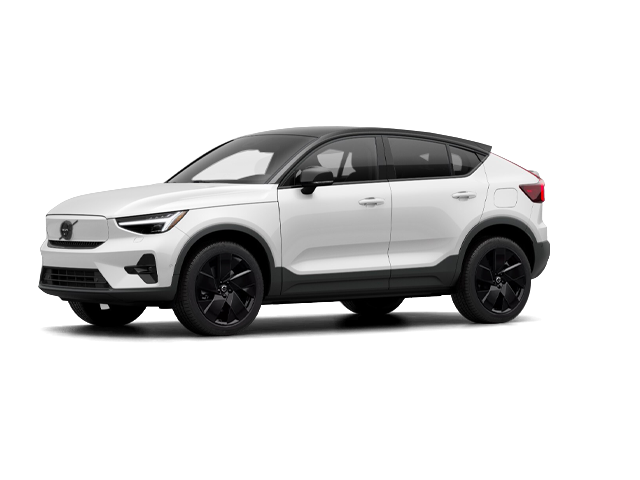
Photo for illustrative purposes only.
Find out moreVolvo Cars Hamilton
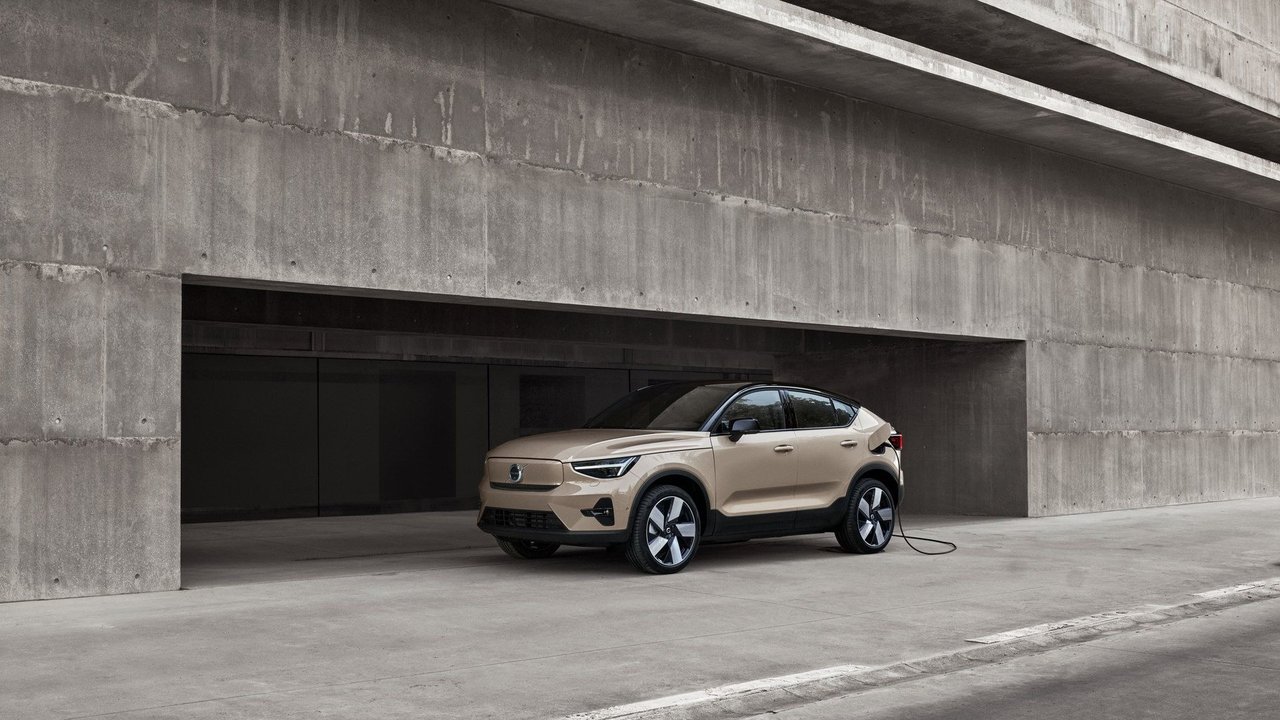
Most electric SUVs on the market follow a familiar template: upright proportions, a squared-off rear end, and a roofline that prioritizes maximum headroom above all else. The 2026 Volvo EC40 takes a different approach. With its fastback coupe roofline, lower stance, and improved aerodynamics, the EC40 is built for drivers in Hamilton who want a fully electric vehicle that looks and feels distinct from everything else in a dealership parking lot.
Formerly known as the C40 Recharge, the EC40 shares its platform, wheelbase, and battery pack with the EX40 — but the two vehicles deliver noticeably different driving experiences. The EC40's sloping rear roofline drops the overall height by 56 mm compared to the EX40, which improves airflow over the body and lowers the drag coefficient to 0.319. That aerodynamic edge translates directly to greater range and a more planted highway feel. For Hamilton drivers who commute along the QEW or the 403 daily, that difference is one you can measure at the charging station.
At a Glance: 2026 Volvo EC40 vs. EX40
Before diving into the details, here is a side-by-side look at how the EC40 and EX40 compare across key specifications. Both vehicles share the same platform and battery, but the EC40's coupe design creates measurable differences in aerodynamics, range, and cargo configuration.
|
Specification |
EC40 Single Motor |
EC40 Twin Motor |
EX40 Single Motor |
EX40 Twin Motor |
|---|---|---|---|---|
|
Horsepower |
248 hp |
402 hp |
248 hp |
402 hp |
|
Torque |
310 lb-ft |
494 lb-ft |
310 lb-ft |
494 lb-ft |
|
Drivetrain |
RWD |
AWD |
RWD |
AWD |
|
0–100 km/h |
7.3 sec |
4.7 sec |
7.3 sec |
4.8 sec |
|
Estimated Range (EPA) |
480 km |
431 km |
476 km |
418 km |
|
Drag Coefficient (Cd) |
0.319 |
0.319 |
0.329 |
0.329 |
|
Height |
1,591 mm |
1,591 mm |
1,647 mm |
1,647 mm |
|
Battery (Usable) |
79 kWh |
79 kWh |
79 kWh |
79 kWh |
|
Cargo (Seats Up) |
480 L |
480 L |
569 L |
569 L |
|
Frunk Volume |
21 L |
21 L |
N/A |
N/A |
Aerodynamics and Range: How the Coupe Roofline Pays Off
The EC40's drag coefficient of 0.319 is lower than the EX40's 0.329. In percentage terms, that is roughly a 3-percent improvement in aerodynamic efficiency — a number that directly affects how far the vehicle travels on a single charge.
The result shows in the range figures. The EC40 Single Motor Extended Range achieves an estimated 480 km on a full charge (EPA), compared to the EX40 Single Motor's 476 km. At the Twin Motor level, the gap widens: 431 km for the EC40 versus 418 km for the EX40. That 13-kilometre advantage on the Twin Motor may seem modest on paper, but over weeks and months of Hamilton commuting, it adds up to fewer charging sessions and more flexibility for longer trips.
Both the EC40 and EX40 draw from the same 82 kWh battery (79 kWh usable) and support DC fast charging at up to 200 kW, with a 10-to-80-percent charge taking approximately 28 minutes. The EC40 also includes a 21-litre frunk (front trunk) — a small but practical storage area for charging cables or valuables that the EX40 does not offer.
Twin Motor Performance: 402 Horsepower and 4.7-Second Acceleration

The EC40 Twin Motor produces 402 horsepower and 494 lb-ft of torque through dual electric motors — one on each axle — delivering standard all-wheel drive. The Twin Motor variant includes an updated performance software calibration that optimizes accelerator response, bringing the 0-to-100 km/h time down to 4.7 seconds. That is a tenth of a second quicker than the EX40 Twin Motor's 4.8-second sprint — a small edge, but one that reflects the EC40's lower, more aerodynamic profile and its tuned power delivery.
For daily driving in Hamilton, the Twin Motor's AWD system provides reassuring traction during Ontario's winter months, when snow and ice can make rear-wheel-drive vehicles feel unsettled. The instantaneous torque delivery from both motors means that highway merges on the LINC and passing manoeuvres on Highway 6 feel controlled and immediate.
The Single Motor Extended Range variant, at 248 horsepower and 310 lb-ft, prioritizes efficiency and range over outright speed. Its 7.3-second 0-to-100 km/h time is more than adequate for urban and suburban driving, and the rear-wheel-drive layout keeps the vehicle lighter and more energy-efficient on flat Ontario highways.
Design: What Sets the EC40 Apart Visually
Stand the EC40 and EX40 side by side, and the differences are immediately visible. The EC40's roofline sweeps downward from the B-pillar to the rear spoiler, creating the fastback profile that defines the vehicle's character. The EX40 maintains a more conventional SUV silhouette with a flatter roof and a taller rear hatch.
That design choice does more than change the look. The EC40 stands 1,591 mm tall — 56 mm lower than the EX40's 1,647 mm. The reduced height gives the EC40 a wider, more grounded visual proportion. From the front, the two vehicles share the same face, including Volvo's Thor's Hammer LED headlights and a body-coloured closed front grille. From the side and rear, however, the EC40 reads as a different vehicle entirely.
The lower roofline also affects rear headroom. Front-seat occupants will not notice a difference — front headroom with the panoramic roof measures 1,040 mm in the EC40 versus 997 mm in the EX40. Rear headroom in the EC40 is 932 mm, compared to 974 mm in the EX40. That 42-mm difference is worth noting for taller rear-seat passengers, though it remains comfortable for most adults on typical trips.
Interior and Cargo: What the Coupe Shape Means for Practicality
The EC40's interior shares the same dashboard layout, materials, and technology as the EX40. Shoulder width (1,440 mm front, 1,429 mm rear), legroom (1,040 mm front, 917 mm rear), and hip room (1,390 mm front, 1,388 mm rear) are identical across both vehicles. The driving position, seat comfort, and cabin ambiance are the same.
Where the EC40 diverges is cargo space. With the rear seats in place, the EC40 holds 480 litres — compared to 569 litres in the EX40. Fold the rear seats down, and the EC40 expands to 1,196 litres versus the EX40's 1,328 litres. The difference is a direct consequence of the sloping roofline, which reduces the vertical space available in the rear cargo area.
For Hamilton drivers whose cargo needs are limited to daily essentials — groceries, gym bags, weekend luggage, a stroller — the EC40's 480 litres behind the rear seats is more than sufficient. The 21-litre frunk also adds a separate, secure storage area that the EX40 lacks. Drivers who regularly transport larger items or bulkier loads may find the EX40's taller cargo opening more practical.
Technology and Safety: Shared Across the Platform
The EC40 and EX40 share the same technology and safety equipment. Google built-in is standard, delivering Google Maps, Google Assistant, and Google Play directly through the infotainment system. Apple CarPlay is also included.
Volvo's full suite of active safety systems is standard across both vehicles. This includes collision avoidance with automatic braking for vehicles, pedestrians, cyclists, and large animals, BLIS blind spot monitoring with steering assist, Cross Traffic Alert with autobrake, Pilot Assist (adaptive cruise control with lane-centering), and oncoming lane mitigation. A rear multi-link suspension paired with MacPherson struts up front delivers a balanced ride that favours comfort on Ontario's uneven road surfaces.
DC fast charging at up to 200 kW is supported on both variants. For home charging on a 240-volt outlet, a full charge takes approximately 8 hours at 48 amps, 13 hours at 32 amps, or 25 hours at 16 amps. The EC40's slightly better aerodynamics mean that the energy consumed per 100 km is marginally lower than the EX40 — 2.2 Le/100 km combined for the Single Motor, and 2.4 Le/100 km combined for the Twin Motor.
Which EC40 Is Right for You?
The choice between the EC40 Single Motor and Twin Motor comes down to how you prioritize range versus performance and drivetrain.
The Single Motor Extended Range is the right fit if your primary concern is maximizing driving range on each charge. At 480 km (EPA estimate), it offers the longest range in the Volvo compact electric lineup — more than the EX40 Single Motor (476 km), the EX30 Single Motor (420 km), and the EC40 Twin Motor (431 km). The rear-wheel-drive layout keeps energy consumption low, and the 248 hp output handles daily commuting and highway driving with ease. This variant suits Hamilton drivers whose routine centres on urban and suburban roads with occasional longer trips.
The Twin Motor is built for drivers who want AWD traction and stronger acceleration. The 402 hp output and 4.7-second 0-to-100 km/h time deliver a sportier driving character, and the dual-motor AWD system provides added confidence on wet or snowy roads. The trade-off is a shorter range (431 km) and slightly higher energy consumption, but for drivers who value winter grip and responsive power delivery, the Twin Motor earns its place.
Experience the 2026 EC40 at Volvo Cars Hamilton
The 2026 Volvo EC40 is available now at Volvo Cars Hamilton in both Single Motor and Twin Motor configurations. Book a test drive at our Hamilton dealership to experience the coupe-style electric SUV that stands apart from the crowd. Our team can walk you through range, charging, and trim options to help you find the EC40 that fits your driving life.
Photo for illustrative purposes only.
Find out more
How to Prepare Your Volvo for Fall and Winter
Cooler mornings and shorter days are the first signs that driving conditions are about to change. A little preparation in the fall makes for calm,...
Read more
How to Choose Between the 2026 Volvo XC60 Plug-In Hybrid and the 2027 Volvo EX60
Volvo builds two mid-size SUVs that let you drive on electricity, and each one does it in its own way. The 2026 XC60 T8 plug-in hybrid pairs a gas...
Read more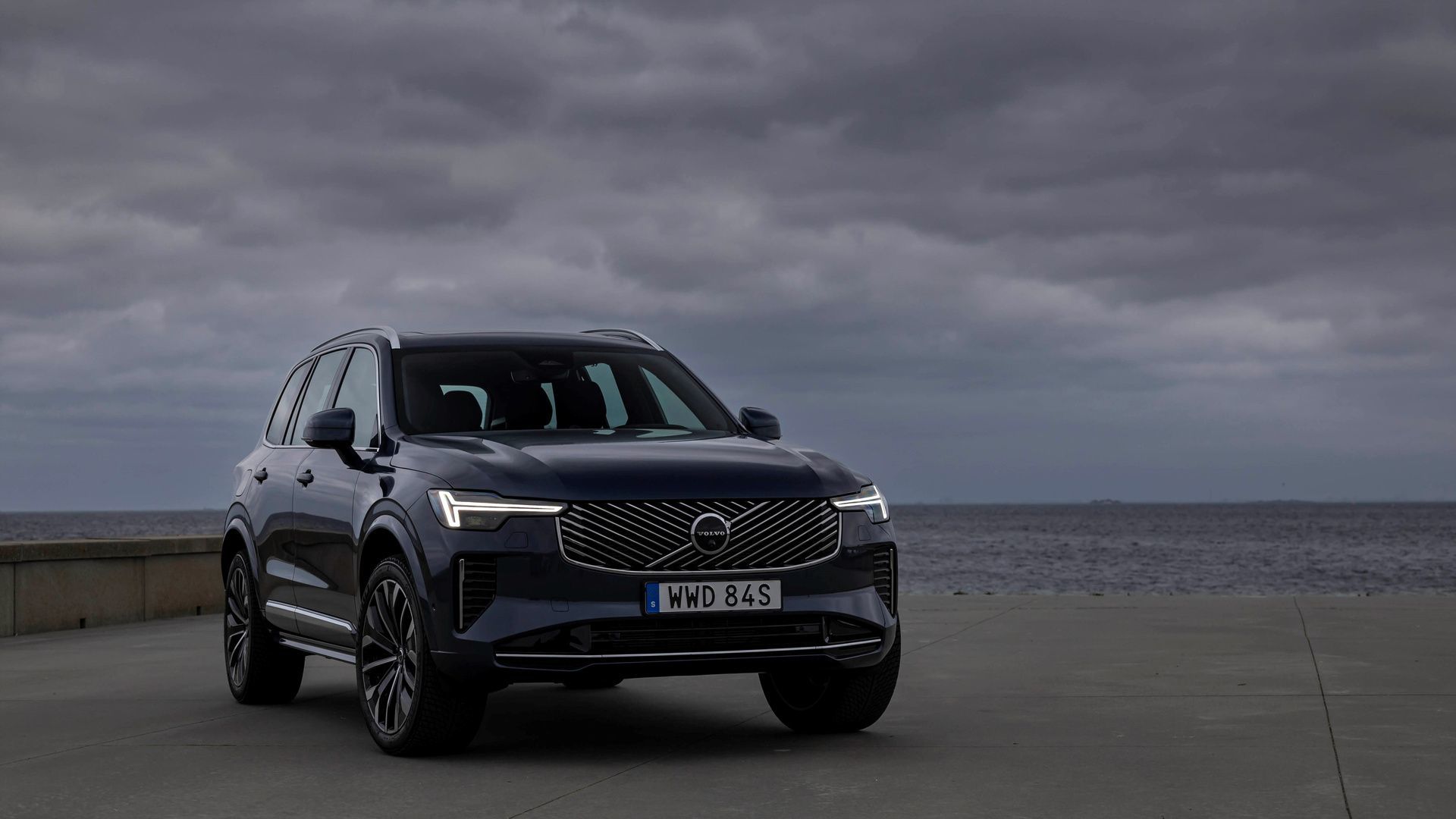
How 2027 Volvo Vehicles Help Prevent and Mitigate Collisions with Large Animals
A deer at the edge of the road at dusk. A moose standing in the middle of a dark highway. Most Canadian drivers have had a close call like this, or...
Read morePowered and developed by
