
Photo for illustrative purposes only.
Find out moreVolvo Cars Hamilton

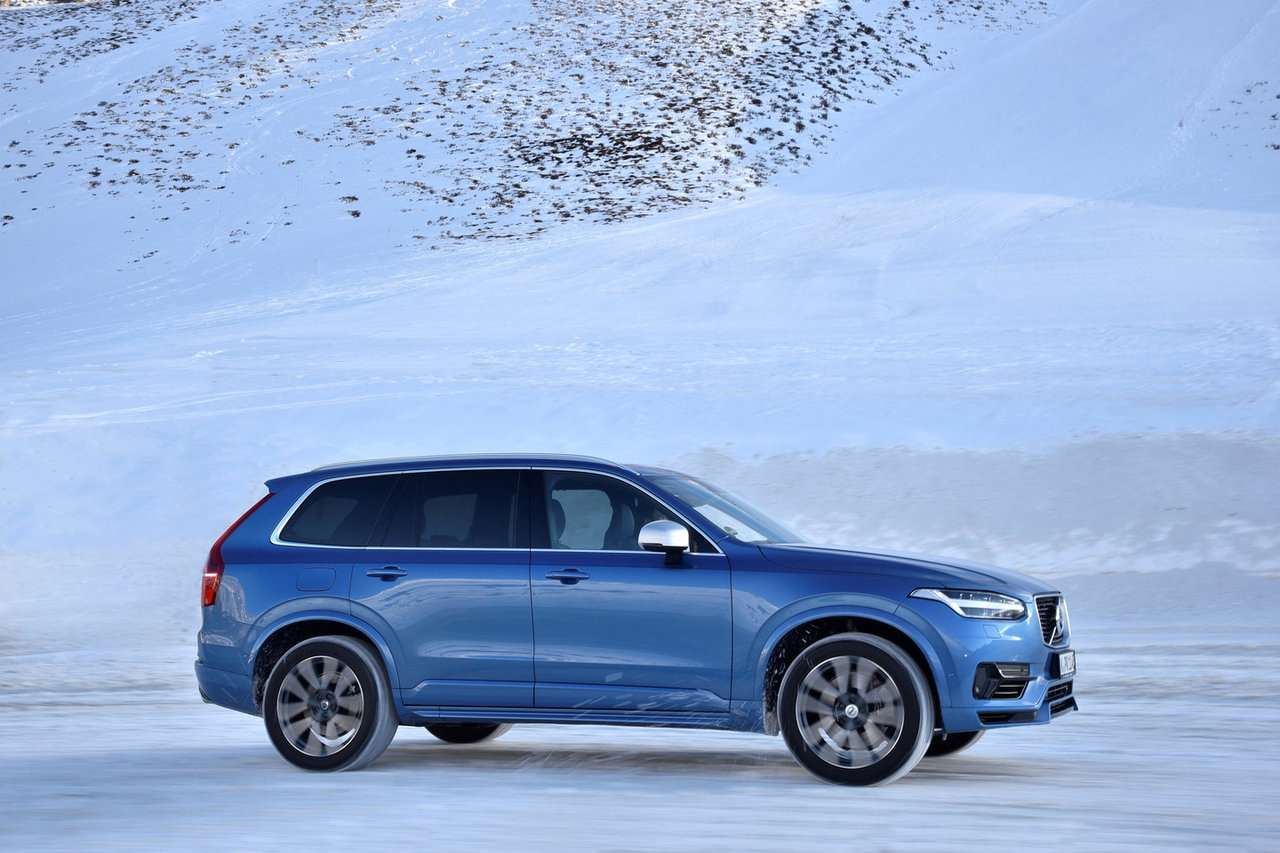
Ontario drivers encounter genuine winter conditions for roughly five months each year. Snow, ice, freezing rain, and sustained cold temperatures create road surfaces that challenge vehicle traction and braking capability. Many drivers assume all-season tires or all-wheel drive systems provide adequate winter performance, but tire composition and tread design create fundamental differences in cold-weather capability.
Understanding how winter tires differ from all-season options helps Ontario drivers make informed decisions about seasonal tire changes. This examination focuses on the technical factors that separate tire categories and explains how winter tires interact with Volvo's safety systems to maximize cold-weather performance.
The 7°C Threshold: Where All-Season Performance Declines
Tire performance changes based on temperature, not just road conditions. The critical temperature threshold sits at 7°C, the point where all-season tire rubber compounds begin losing flexibility.
All-season tires use rubber formulated to remain flexible across a wide temperature range. This compromise design handles warm summer conditions without becoming too soft while maintaining reasonable grip during mild cold weather. However, below 7°C, the rubber compound stiffens, reducing its ability to conform to road surface irregularities.
Winter tires use specialized rubber compounds engineered to remain flexible at temperatures well below freezing. These compounds maintain pliability down to -40°C, allowing the tire to adapt to road texture and maximize contact area even in extreme cold.
This flexibility difference impacts every aspect of tire performance. Braking distances increase with stiff rubber because reduced surface conformity limits friction. Cornering grip decreases as the tire cannot follow pavement contours effectively. Acceleration traction suffers because the tire cannot maintain consistent contact pressure across its footprint.
Testing conducted by the Tire and Rubber Association of Canada demonstrates measurable performance differences. At 0°C on bare pavement, winter tires stop a vehicle approximately 30% shorter than all-season tires when braking from 50 km/h. On packed snow at -10°C, the advantage increases to approximately 40% shorter stopping distances.
These differences matter during emergency situations. The extra metres required to stop with all-season tires can determine whether a driver avoids or experiences a collision.
Tread Pattern Engineering for Winter Conditions
Beyond rubber compounds, tread pattern design significantly impacts winter performance. Winter tires feature specific tread elements engineered to manage snow, slush, and ice.
Sipe Density and Design
Sipes are thin cuts in the tread blocks that create additional biting edges. Winter tires contain substantially more sipes than all-season alternatives, often featuring thousands of individual edges across the tire surface.
These sipes serve multiple functions. They create edges that grip ice surfaces by cutting through to find microscopic texture. They channel water away from under the tire on wet winter roads, reducing hydroplaning risk. They allow tread blocks to flex independently, maintaining contact with uneven surfaces.
Advanced winter tire designs use three-dimensional sipe patterns rather than simple straight cuts. These 3D sipes interlock when pressure loads the tread block, maintaining block stability during cornering and acceleration while preserving flexibility for grip.
Tread Block Configuration
Winter tire tread blocks are designed with specific spacing and angles that differ from all-season patterns. Larger gaps between blocks allow packed snow to release rather than accumulate in the tread. This self-cleaning characteristic maintains traction as the tire rotates through snow-covered surfaces.
Tread block edges are cut at sharper angles compared to all-season designs. These aggressive angles bite into snow and ice more effectively, generating forward thrust during acceleration and creating resistance during braking.
Groove Depth and Water Evacuation
Winter tires typically feature deeper tread grooves than all-season alternatives. This additional depth serves two purposes: it provides longer service life during abrasive winter conditions, and it creates larger channels for water and slush evacuation.
Ontario winters frequently involve freeze-thaw cycles that create wet road surfaces even in cold weather. Deep grooves channel this water away from the contact patch quickly, maintaining rubber-to-road contact that generates friction.
How Winter Tires Interact with Volvo Safety Systems
Volvo vehicles include multiple safety systems that rely on tire performance to function effectively. Winter tires enhance these systems' capability by providing improved traction that allows safety features to work as designed.
Anti-Lock Braking System (ABS) Performance
ABS prevents wheel lockup during hard braking by modulating brake pressure. The system works by maintaining the tire at optimal slip ratio, the point where traction peaks just before skidding begins.
Winter tires expand the traction envelope that ABS manages. With better grip from specialized compounds and tread patterns, ABS can maintain higher deceleration rates before reaching the wheel-lock threshold. This translates to shorter stopping distances during emergency braking situations.
On ice, where available traction is severely limited regardless of tire choice, winter tires still provide advantage. The increased number of biting edges and flexible compound allow the tire to find and exploit microscopic texture that all-season tires cannot access.
Stability Control and Traction Management
Electronic stability control (ESC) systems monitor vehicle direction and compare it against driver steering input. When the systems detect differences indicating loss of control, they apply individual wheel braking and reduce engine power to restore stability.
Winter tires provide these systems with a larger operating margin. Better baseline traction means the vehicle stays within stable parameters during normal driving, reducing how frequently stability systems need to intervene.
When intervention becomes necessary, winter tires respond more predictably to stability control inputs. The tire can generate the lateral forces the system commands more consistently, allowing faster and more precise control restoration.
All-Wheel Drive Interaction
AWD systems distribute power between front and rear axles to maximize traction. However, AWD cannot create traction where none exists—it can only distribute available grip between axles.
Winter tires multiply AWD effectiveness by increasing the traction available at each wheel. An AWD vehicle on all-season tires may struggle to climb icy hills because even distributed power finds insufficient grip. The same vehicle on winter tires has substantially more traction for the AWD system to manage, enabling progress where all-season tires would fail.
Importantly, AWD provides no braking advantage. All vehicles use all four wheels for braking regardless of drive configuration. Winter tires improve braking performance equally on two-wheel drive and AWD vehicles.
Installation Timing for Hamilton's Climate

Hamilton's location in Southern Ontario creates a transition climate where winter timing varies annually. Temperature patterns typically establish winter conditions between mid-November and mid-December, though early cold snaps occasionally arrive in late October.
Temperature Monitoring Approach
Rather than installing winter tires by calendar date, monitoring forecast temperatures provides more accurate timing. When overnight lows consistently approach 7°C and daytime highs stay below 10°C, conditions favour winter tire installation.
This temperature-based approach ensures winter tires provide their compound advantages immediately rather than experiencing accelerated wear during warm autumn days. Winter tire rubber wears faster on warm, dry pavement due to its softer compound.
For Hamilton specifically, November represents the optimal installation window most years. This timing typically precedes the first significant snowfall while avoiding unnecessary warm-weather wear.
Spring Removal Considerations
Winter tires should be removed once sustained warm temperatures return. Daily temperatures consistently exceeding 7°C indicate conditions where all-season or summer tires provide better performance and wear characteristics.
In Hamilton, this transition typically occurs during April. However, late-season snow remains possible through early May, creating a judgment call for drivers. Monitoring extended forecasts helps identify appropriate changeover timing.
Continuing to use winter tires during warm weather increases wear rates significantly. The soft compounds designed for cold flexibility generate excessive heat during warm-weather driving, accelerating tread degradation. Fuel economy also decreases slightly due to increased rolling resistance from the softer compound.
Storage and Maintenance Between Seasons
Proper storage extends winter tire lifespan and maintains performance characteristics. Tires should be stored in cool, dry locations away from direct sunlight and ozone sources like electric motors.
Stacking tires horizontally prevents sidewall stress and deformation. If storing tires mounted on wheels, stack them flat with reduced air pressure. If storing unmounted tires, stand them upright and rotate position monthly to prevent flat spots.
Many tire retailers and dealerships offer seasonal storage services, eliminating home storage space requirements and ensuring proper storage conditions.
Key Considerations for Winter Tire Selection
|
Factor |
Winter Tire Advantage |
|---|---|
|
Operating Temperature |
Remains flexible below 7°C; all-season stiffens |
|
Braking Distance |
30-40% shorter on cold/snowy surfaces |
|
Sipe Density |
Thousands of biting edges vs. hundreds in all-season |
|
Tread Depth |
Typically 2-3mm deeper when new |
|
Snow Evacuation |
Designed for self-cleaning; all-season accumulates snow |
|
AWD Enhancement |
Multiplies available traction for AWD systems to manage |
Common Misconceptions About Winter Tires
Several misconceptions prevent drivers from adopting winter tires despite their proven advantages.
"All-wheel drive replaces the need for winter tires": AWD improves acceleration traction by distributing power between axles but provides no braking or cornering advantage. Winter tires improve all three aspects of vehicle control.
"I drive carefully in winter, so I don't need winter tires": Winter tires reduce the likelihood of needing emergency maneuvers by providing better routine traction. Careful driving complements winter tire benefits rather than replacing them.
"Winter tires are only beneficial in deep snow": Temperature-dependent compound performance means winter tires provide advantages on cold, dry pavement as well as snow and ice.
"The three-peak mountain snowflake symbol on all-seasons means they perform like winter tires": The three-peak symbol certifies minimum winter traction performance, but dedicated winter tires substantially exceed this baseline in testing.
"Winter tires wear out too quickly to justify the cost": When used only during winter months and properly stored, winter tires typically last four to six seasons. Annual cost amortized over multiple years makes winter tires economically reasonable, particularly considering potential accident avoidance.
Making Winter Tires Work with Your Volvo
Volvo vehicles arrive from the factory optimized for all-season tire performance characteristics. Installing winter tires does not require recalibration or adjustment—safety systems automatically adapt to available traction.
Tire pressure monitoring systems (TPMS) track each wheel's pressure individually. When installing winter tires on separate wheels, TPMS sensors must be installed in the winter wheel set or the vehicle will display warning messages. Volvo retailers can install and program TPMS sensors during winter tire mounting.
Maintaining proper tire pressure during winter requires regular attention. Tire pressure decreases approximately 1 PSI for every 5°C temperature drop. Checking pressure monthly and adjusting to recommended specifications maintains optimal winter tire performance.
Experience Volvo Winter Capability at Volvo Cars Hamilton
Winter tires transform how Volvo safety systems perform during Ontario's cold months. The combination of flexible compounds and specialized tread patterns provides the foundation that allows ABS, stability control, and AWD systems to deliver their designed capability.
Visit our team at Volvo Cars Hamilton in Hamilton to discuss winter tire options appropriate for your specific Volvo model and driving patterns.
Photo for illustrative purposes only.
Find out more
The First Details About the Extended-Range 2028 Volvo XC60 and XC90 PHEVs
Volvo has stretched the electric range on two of its plug-in hybrid SUVs, and both the XC60 and XC90 now share the same updated powertrain...
Read more
Natural Resources Canada Increases Its Range Rating for the 2027 Volvo EX60 to 531 km
Range numbers matter when you are thinking about going electric, and the Volvo EX60 just picked up some good news on that front. Natural Resources...
Read more
What Can the Volvo Cars App Do for You?
If you drive a Volvo, there is a good chance you have seen the Volvo Cars app on your phone but never dug into everything it can do. It is built to...
Read morePowered and developed by
